Tree Cabling and Bracing in Mountain Home, AR
A big oak with a weak fork doesn't always have to come down. Our tree cabling and bracing service in Mountain Home, AR installs steel cables and rods that support split or heavy limbs for homeowners, so a healthy tree you love can stay in the yard safely for years.
Call for a free estimate: (870) 706-3112Ask for a free estimate
Give us a name and a phone number. Anything else you add helps us show up with the right gear.
- Flat upfront pricing
- Insured
- Free estimates
- We sweep up before we leave
What is cabling and bracing?
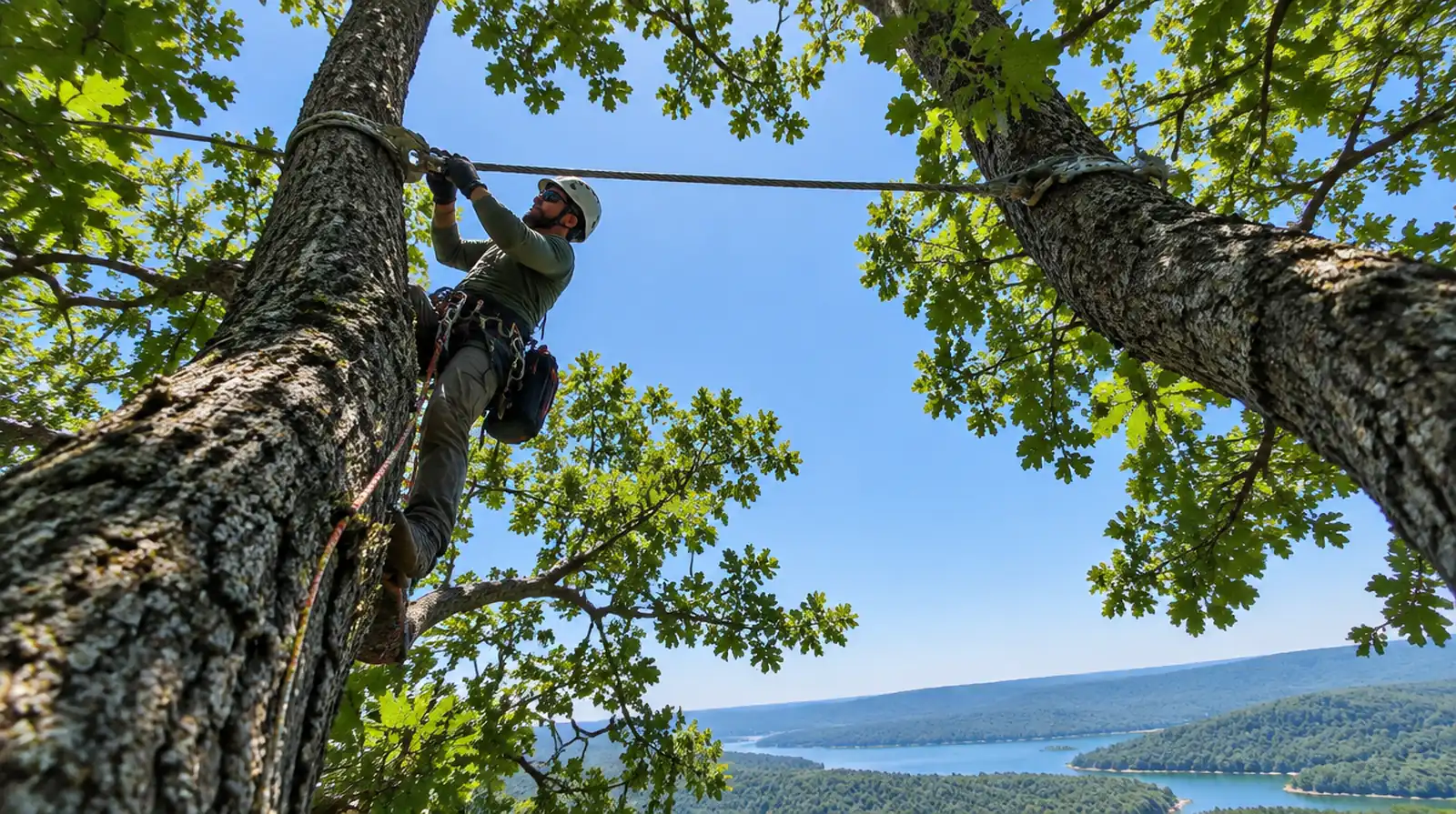
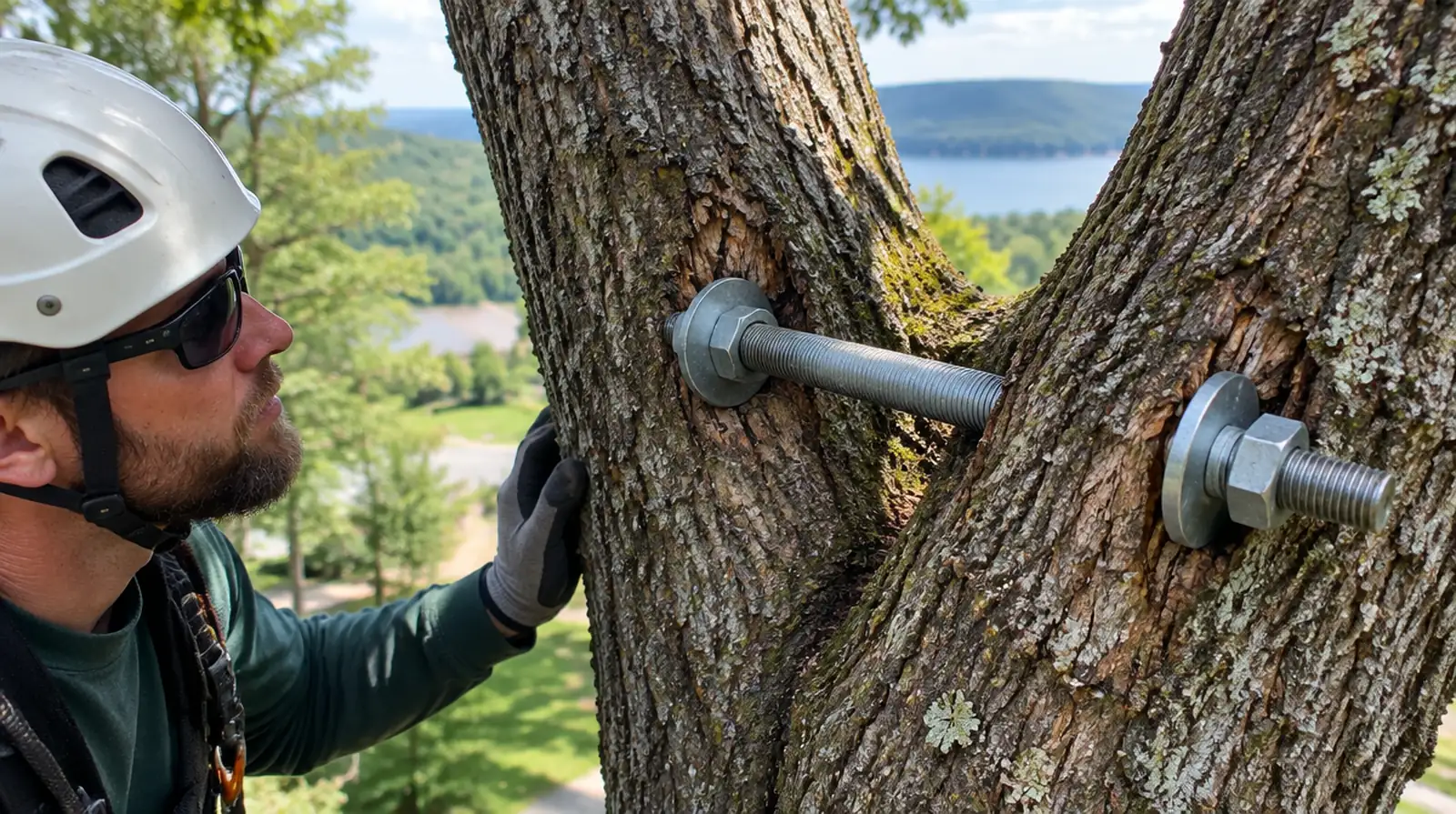
Cabling is a flexible steel cable installed high in the crown between two leaders, so they share the load and can't spread too far apart in a storm. Bracing is a threaded steel rod drilled through a split or weak union lower down, holding the two halves together.
Both are installed with hardware made for trees and sized to the limbs. Nothing wraps around the bark, because a band around a limb would choke it as it grows.
Which trees are good candidates?
Cabling works on a healthy, solid tree with one structural weakness, like a narrow V-shaped fork with bark pinched inside it, a crack that's just starting, or a long heavy limb over the house. Old white oaks, big silver maples and twin-trunked sycamores are the ones we cable most often.
It isn't for a dying tree. A black oak losing its crown to decline, or a trunk with a hollow core, needs tree removal, and cables won't change that.
Why do these forks split?
When two trunks grow up side by side, bark gets trapped between them instead of wood. That joint is weak. Add the weight of ice in January or a heavy wet canopy in a May storm, and the fork pulls apart. Once a crack opens, every storm makes it wider.
What affects the cost?
The size of the tree, how many cables or rods it needs, and how high a climber has to go. We usually do a tree trimming visit at the same time to lighten the heavy limbs, which helps the cables do their job and saves you a second trip.
Cable it or take it down?
If the tree is healthy and the weak point is caught early, cable it. If the split already runs down into the trunk, the wood is rotten, or the tree would hit the house if it failed and is in poor health, take it down. We'll be honest about which side your tree falls on.
How we install a support system
Every cabling job starts with a close look at the tree from the ground and then from the canopy. The climber checks the union where the leaders meet, looks for cracks, included bark, cavities and decay, and decides where the hardware should go. Cables are usually set about two thirds of the way from the weak union to the tips of the limbs being supported, which gives the most support without putting stress at a single point.
We use through-bolt hardware rather than wrapping cables around limbs, because wraps girdle the bark as the tree grows. Brace rods are installed lower, through a split or a weak union, to keep the two halves from moving against each other. Some trees need just one cable. Others need a combination of cables and rods. We explain what we're recommending and why before any drilling starts.
Why the right trees matter
Hardware works best on trees that are otherwise healthy. A vigorous white oak or a big sycamore with one weak fork is a good candidate. A tree with a hollow trunk, a failing root plate or heavy dieback in the crown isn't, because the cable can't fix those problems. In those cases we'll tell you plainly that removing the hazardous tree is the safer call, rather than install hardware we don't think will help.
Checking on it over the years
A cabled tree keeps growing, and that changes how the support system sits in the canopy. We recommend having the hardware looked at every few years and after any major ice or wind event, which north Arkansas gets plenty of. A quick inspection catches a loose cable or a new crack before it turns into a problem.
Questions people ask us
How long do the cables last?
Many years, but they need a check every few years as the tree grows. We'll look at the hardware and adjust tension when needed.
Does drilling for a rod hurt the tree?
A healthy tree seals around the rod over time. It's a small wound compared to losing half the tree.
Can you see the cables from the ground?
Barely. They sit high in the canopy and most people stop noticing them once the leaves are on.
Is cabling a guarantee?
No. It lowers the risk a lot, but no method can promise a tree won't fail in an extreme storm.
Have a tree with a split you're watching?
Call us before the next storm season. We'll check it and tell you if cabling makes sense.
Call (870) 706-3112