Hazardous Tree Removal in Mountain Home, AR
A dead oak over the bedroom, a pine with peeling bark beside the driveway, a cedar that started leaning after the last storm. Our hazardous tree removal service in Mountain Home, AR takes down failing trees with the extra care brittle, unpredictable wood needs.
Call for a free estimate: (870) 706-3112Ask for a free estimate
Give us a name and a phone number. Anything else you add helps us show up with the right gear.
- Flat upfront pricing
- Insured
- Free estimates
- Careful rigging near homes
What makes a tree hazardous?
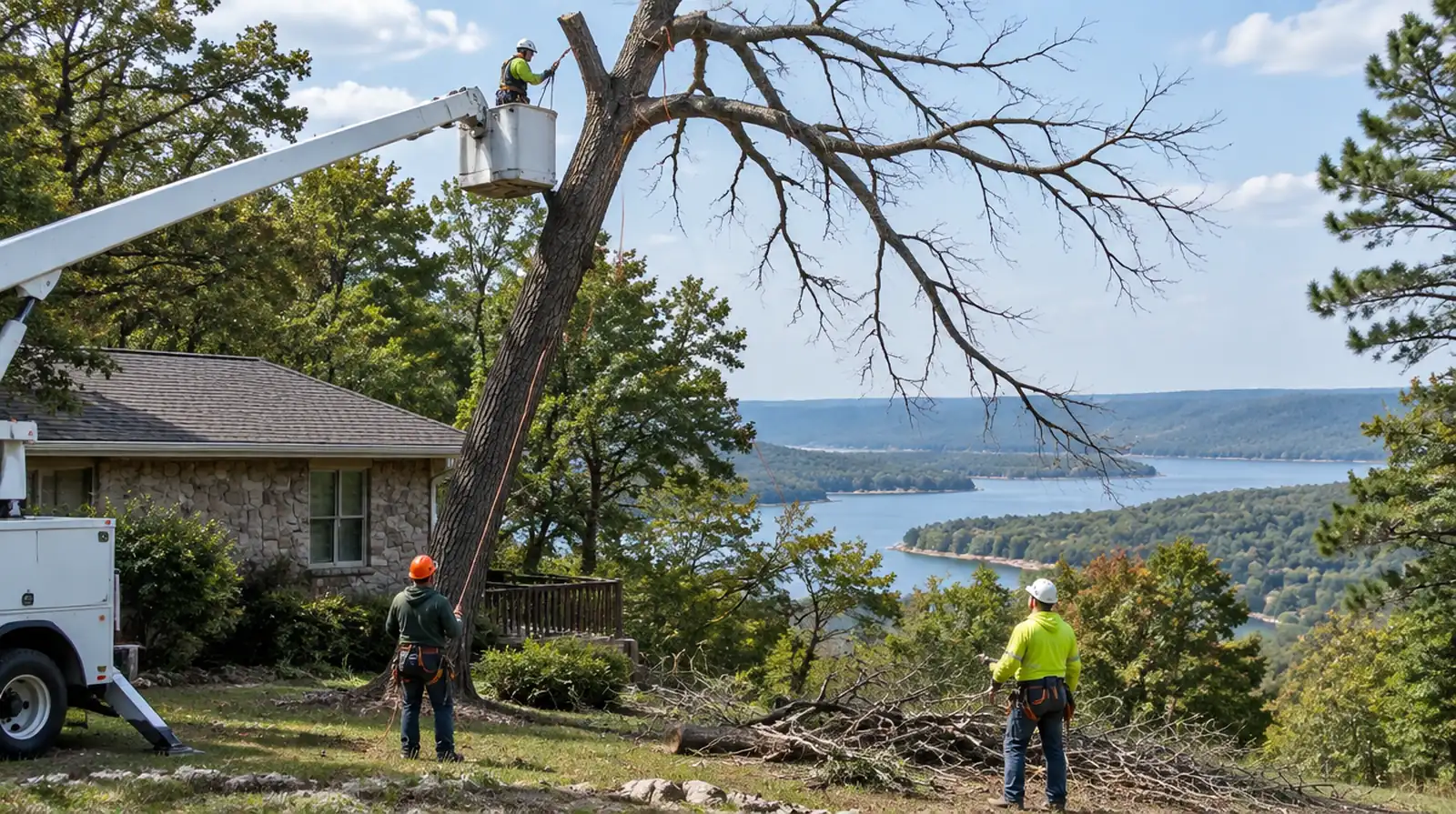
A tree becomes a hazard when two things are true at once: part of it is likely to fail, and there is something under it that would be hurt or damaged if it did. A dead snag in the middle of the woods isn't a hazard to anyone. The same snag hanging over a roof, a deck, a driveway or a path the grandkids use is.
Around Mountain Home the most common hazardous trees we see are oaks in decline, pines killed by bark beetles after a dry summer, ash trees hit by emerald ash borer, and trees left cracked or leaning after ice or wind. Bradford pears with split crotches show up in nearly every older subdivision.
Warning signs worth a closer look
- Dead or bare limbs in the upper crown while the rest of the tree leafs out.
- Bark falling off in sheets, exposing gray, dry wood underneath.
- Mushrooms or conks growing at the base or on the trunk, which often point to internal decay.
- Cracks running down the trunk or through a fork where two leaders meet.
- A new or worsening lean, especially with cracked soil or roots lifting on the far side.
- Hollow spots or cavities where woodpeckers or carpenter ants have moved in.
- Broken hangers stuck in the canopy after a storm.
One sign on its own doesn't always mean the tree has to go. Several together, over something you care about, usually do. If you aren't sure, call and we'll come look.
Why dead trees are harder to take down
Live wood bends. Dead wood snaps. When a climber ties into a healthy tree and lowers a heavy limb on a rope, the tree flexes and absorbs the load. A dead tree may not. Limbs can break off when the rope tightens, tops can snap when a climber puts weight on them, and a trunk with hidden rot can fail in a direction no one planned for.
That changes how we work. On many dead trees we keep climbers out of the canopy entirely and work from a bucket truck or from a second, healthy tree. Cuts are smaller so each piece puts less stress on the wood. Rigging points are chosen on solid wood, and the ground crew keeps everyone well outside the drop zone. Sometimes, if there is room and nothing is at risk, the safest choice is to fell the whole tree in one direction, after checking the hinge wood carefully.
How a hazardous removal is planned
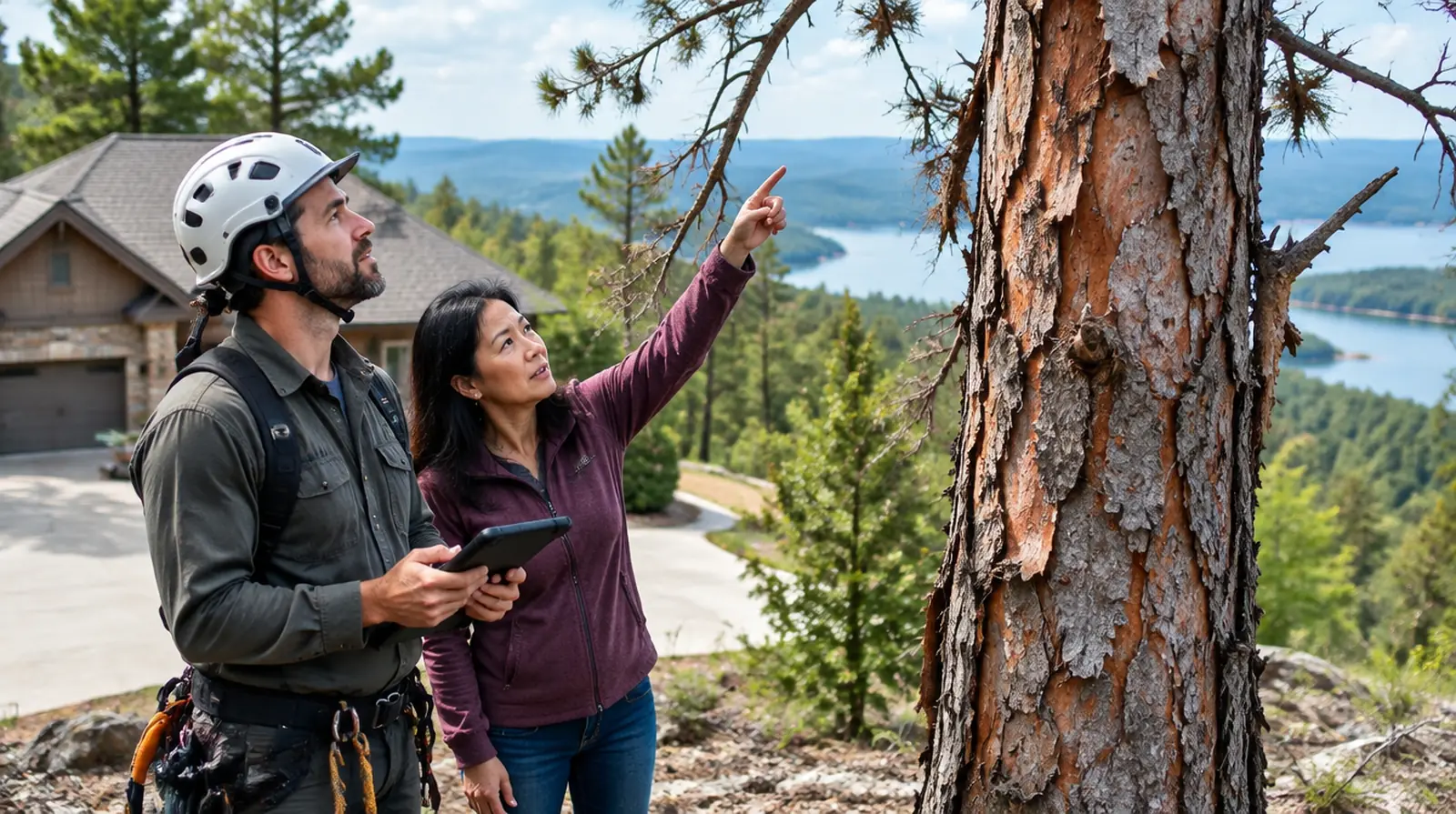
Every hazardous job starts with a walk around the tree. We look at the lean, the condition of the root flare and the soil, where decay is, what's underneath, and how equipment can reach it. On lake lots and steep driveways we also plan where wood will go once it's on the ground, because a round of oak on a slope will roll a long way.
From there we decide whether the tree comes down in sections, whether a bucket truck can do the work, and what needs protecting, such as a roof edge, a septic field, a well head or a garden bed. You'll know the plan and the price before we start. On the day of the job, we'll ask you to keep people and pets inside or well away until the crew says it's clear.
Trees near power lines
If a hazardous tree is touching or leaning into a power line, don't try to deal with it yourself and don't let anyone else try. Call the electric cooperative or utility first. Line-clearance work near energized lines is handled by crews qualified for it. Once the utility has made the line safe or dropped the service, we can take care of the rest of the tree.
Can the tree be saved instead?
Sometimes. A tree with one dead leader and a healthy remainder may only need that leader taken off with careful tree trimming. A healthy tree with a weak fork can often be supported with cabling and bracing. We'll tell you straight when we think a tree can stay, and when we think it's past saving. For general takedowns of healthy trees that are simply in the way, see our tree removal page. If a storm already brought it down, our storm damage cleanup page covers that work.
What affects the cost?
Size, condition and location matter most. A dead tree standing in the open costs less to remove than one leaning over a house, because the second job takes more rigging, smaller cuts and more time. Access for a bucket truck, the slope of the lot, how much wood you want hauled off and whether you want the stump ground all change the price too. You'll get one written number for the work we agree on.
Hazardous tree questions
Can I wait until spring to deal with a dead tree?
Sometimes, but dead wood gets weaker the longer it stands, and winter ice and spring thunderstorms are when it is most likely to fail. If it is near the house, a driveway or a spot where people walk, sooner is better.
My neighbor's dead tree hangs over my house. What can I do?
Who is responsible is a question for your neighbor, your insurer or an attorney, not a tree crew. We can look at the tree and describe its condition so everyone is working from the same information, and we can do the work once the owner agrees.
Does hazardous tree removal cost more than a normal removal?
Usually, yes. Extra planning, smaller cuts, more rigging and a slower pace add time. You get the price in writing before any work starts.
Is a leaning tree always dangerous?
No. Many trees grow with a lean and stay that way for decades. A lean that is new or getting worse, or one with cracked soil or lifted roots on the opposite side, is the kind to have looked at right away.
Worried about a tree over your house?
Call and tell us what you're seeing. We'll come look, explain the options and give you a written price.
Call (870) 706-3112